Part 3 ⚖️
The stones were exactly where she’d left them.
Down to the angle of the mortar line.
They hadn’t thought to look behind a working fireplace.
“They’ll be back,” she said. “And they’ll look harder.”
“Then we move them tonight,” Tobias said. “My barn. Behind the tool rack. On foot. Horses on the track can be heard from the road.”
They carried the oilcloth bundle two miles in the dark.
The next night, the riders came back.
Mabel lay awake in Tobias’s barn and listened to them tear her house apart.
In the morning, the floor was ripped up in three places. The fireplace stones pulled out. The hole empty.
She stood in the wreckage and felt a cold, clean anger.
Not one ounce of self-pity in it.
“Bramwell will know it was you who helped me,” she told Tobias.
“Let him. He can’t prove it. And if he tries, he has to explain why his men were inside your house at midnight.” 😏
Fenwick filed the next morning. The hearing was set for Friday.
By Wednesday, Bramwell’s story was all over town.
Poor Mabel. Unstable with grief. Convinced a worthless shack hides a fortune. Some no-account neighbor egging her on.
Verity showed up with a basket of food and a face full of wounded concern.
“Think about what you’re doing to this family, Mabel. You’re destroying Bramwell.”
“Bramwell destroyed himself,” Mabel said. “He packed my bags before I’d even grieved our parents. He offered me twenty dollars for land tied to six hundred acres and a spring. He sent men to break into my house at night.”
She looked at her sister.
“At what point was I supposed to feel family loyalty?”
Verity said nothing.
“You’re different,” she finally whispered.
“I’m the same,” Mabel said. “You just never looked.” 💥
Thursday evening, Hollis Vane came himself.
Tall. Heavy. Rich clothes. He sat at her table without being asked.
“Two thousand dollars for a clean deed to the valley. You skip the hearing tomorrow. Everybody’s better off.”
Two thousand dollars. More than most people in the county made in five years.
“Mr. Vane,” Mabel said calmly. “I know about the eleven-thousand-dollar guarantee. I know about the deed. I know about Theodore Marsh’s signature.”
His face shifted.
“If I walk away, your fake deed stands. And you keep squeezing my brother, knowing he can’t expose you without exposing himself. You’re not here to help me.”
For the first time, he looked at her like he’d never actually seen her before.
“No,” she said. “Thank you for coming.”
After he left, Tobias asked quietly, “Why’d you say no?”
“Because two thousand dollars is a transaction,” she said. “That valley is my grandfather’s life’s work. And my father’s trust. I can earn money other ways. I can’t ever earn that back.” 🥹
The Silver Creek courtroom was packed.
Mabel felt it the second she walked in. A crowd that had already chosen sides.
She walked in anyway.
Tobias walked in two steps behind her. He didn’t take her arm. He just sat down right behind her table and put his hat on his knee.
Bramwell had two expensive lawyers brought in from the city.
Judge Alderman was seventy. He sat down, looked over his spectacles, and said simply:
“Let’s proceed.”
Bramwell’s lawyer, Carver, was smooth as silk.
He called it a simple land sale, “disrupted by a grieving family member who misread old papers.”
He said “grief” three times in ten minutes. “Confused” twice.
Mabel wrote down every word.
Then Fenwick stood up.
The federal patent. The survey stones. The unresolved 1856 dispute.
One piece at a time.
“Your Honor, I call Miss Mabel Whitcomb.”
“Objection!” Carver snapped. “She’s not a surveyor, a lawyer or a land clerk!”
“She’s a witness to fact,” Fenwick said.
“Overruled,” said the judge. “Sit down, counselor.” 😏
Mabel told it plainly.
The iron ring. The chest. The ledger. Her father’s letter.
No drama. She just laid the facts out in order and let them be dramatic all by themselves.
She watched the crowd stop expecting a confused woman.
And start listening.
“Did your brother have the legal right to sign that deed?” Fenwick asked.
“No,” Mabel said, looking straight at the judge. “My grandfather never transferred that valley. My father never transferred it. My brother signed away something he never owned.”
Carver tried to rattle her for forty minutes.
Finally, he tried grief again.
“Miss Whitcomb, given the recent loss of your parents, isn’t it possible your judgment has been…”
“No.”
The word stopped him mid-sentence.
“My parents died seven weeks ago. I’ve kept accounts for twelve years. Those are two separate facts. They have nothing to do with each other.”
Somebody in the gallery made a sound. Not quite a laugh. Not quite applause.
The judge didn’t stop it. 😂
After a recess, the county recorder took the stand.
Theodore Marsh looked like he hadn’t slept in four months.
“Did you check the federal patent before you stamped this deed?” Fenwick asked.
“I… the records weren’t…”
“Did anyone tell you to hurry it through?”
A long silence.
“Mr. Vane’s office,” Marsh whispered. “They said the family all agreed. That it was just a formality.”
You could actually see it happen.
Bramwell’s whole story cracking right down the middle. 😱
In the hallway, Bramwell caught up to her. He looked years older.
“I didn’t know about the patent, Mabel.”
“Maybe not. But you knew enough to offer me twenty dollars before I walked in that door. And enough to send men into my house at night.”
He was quiet a long time.
“I needed the money,” he said finally.
It was the most honest thing he’d said to her in years.
“Talk to Fenwick before the judge comes back,” she said. “If you admit the deed was wrong and don’t fight the boundary, it won’t erase what’s coming. But it changes its shape.”
“Why would you help me?”
“Because I want what’s mine. And I don’t want to watch you lose everything. Both are true at once.”
Forty minutes later, Judge Alderman ruled.
The patent: valid.
The valley and its water: part of the homestead.
The deed: void.
The recorder: referred for investigation.
“Miss Whitcomb’s claim is upheld. We’re adjourned.” ⚖️
On the courthouse steps, Tobias stood one step below her.
“You all right?”
“I expected to feel like I’d won.”
“You did win.”
“My brother’s going to lose most of his ranch. And Papa didn’t live to know he was right about me.” She sighed. “It’s more complicated than winning.”
“Yeah,” Tobias said. “Usually is.”
“Why did you help me?” she asked. “Before you knew anything. Half the county sided with Bramwell.”
He thought about it.
“Because you spotted a rotten post at thirty feet and told me straight. Most folks want something from you before they’ve even met you. You wanted a trade. That’s unusual. I respect unusual.”
A pause.
“Meals were good too.”
Mabel laughed out loud. The first fully honest thing she’d done all day.
“Come on. I owe you a very good dinner.” ❤️
Three weeks later, a wealthy cattleman named Gerald Sutton knocked on her door.
“Twelve thousand dollars for the whole valley. Clean deal. No tricks.”
Twelve thousand. More than her father earned in thirty years.
She rode out to the spring alone that afternoon.
Put her hand in the cold, clear water.
Her father hadn’t left it to her to sell.
He’d left it to the one child who understood the difference between what something is worth and what it is.
She turned Sutton down.
And offered him a lease instead. Six years of water and grazing access. Eight hundred fifty dollars a year.
She kept the land. The water. Everything.
Sutton signed by Friday.
With her first income, she hired two brothers, Will and Cal Deering.
Three ranches had turned them away with excuses.
“Breakfast is at six-thirty,” she told them. “If you’ve got a problem, tell me straight. Welcome to the Whitcomb homestead.”
The brothers looked at each other.
Like men waiting for a catch that never came. 🥹
Bramwell lost his cattle. His equipment. Still three thousand dollars short on Vane’s debt.
So Mabel rode to the main ranch. For the first time since the wagon.
She sat in the kitchen she’d run for twelve years.
She slid a paper across the table. A share of her water income in exchange for a road easement across his north pasture.
“It won’t save you. But it keeps the ranch running.”
“Why would you do this?”
“Because it’s fair business. And because you’re my brother.” She held his eyes. “This isn’t forgiveness, Bramwell. That’s a separate thing. But it’s a start.”
He picked up the pen.
Two weeks later, Marcus came to her door, hat in his hands.
“Bramwell said to tell you… he went through all the household accounts. Every entry you kept for twelve years.”
He cleared his throat.
“He says they were all correct.”
“Tell him I know,” Mabel said. “I kept them.” 😌
Verity came back before Christmas.
No basket this time. No act.
“I owe you an apology.”
“Yes,” said Mabel. “You do.”
Verity blinked. She’d expected Mabel to say oh, don’t be silly.
“I laughed at you. I let Bramwell say terrible things. I’m sorry. I mean it.”
“I believe you,” Mabel said. “An apology is a beginning. Not an ending. Stay for tea. We’ll start there.”
In February, Tobias moved the old empty chest.
Something rustled inside.
Mabel pressed the bottom. A false panel.
Underneath, one small note.
Her grandfather’s handwriting. 1853.
“If you’ve read the ledger and the letter and come this far, you are exactly the person I hoped would find this. The land is yours by right and by trust. Don’t let anyone tell you what it’s worth. You’ll know better than they do. — Elias Whitcomb.”
He’d written it thirty years before she was born.
For someone he couldn’t name.
And trusted the house to keep it until she came. 😭
In March, over the spring fencing schedule, Tobias set down his pencil.
“Mabel. I want to marry you.”
“The homestead stays in my name,” she said. “The accounts stay mine. I want your thoughts. But the final word is mine.”
“I’m not asking you to change any of that.”
“Most men would.”
“The woman I want to marry pulled an iron ring out of a dirty floor and spent the night reading thirty-year-old accounts instead of panicking. Changing that would be a fool’s errand.”
He held her gaze.
“I’m not a fool.”
“No,” she said. “You’re not. That’s a yes.”
He nodded. Picked up his pencil.
And the kettle started to sing. ❤️
They married in April. Small. No fuss.
Fenwick stood as witness. The Deering brothers came. And neighbors who’d decided over the winter that a woman who kept honest books and paid fair wages was worth knowing.
In May, packing the old papers away, Mabel found one last line.
Tucked inside the ledger’s back cover. Her father’s handwriting. So small she’d missed it for months.
“She will know what to do with it. She always has.”
She read those nine words until they stopped feeling like words.
Then she walked out onto her porch.
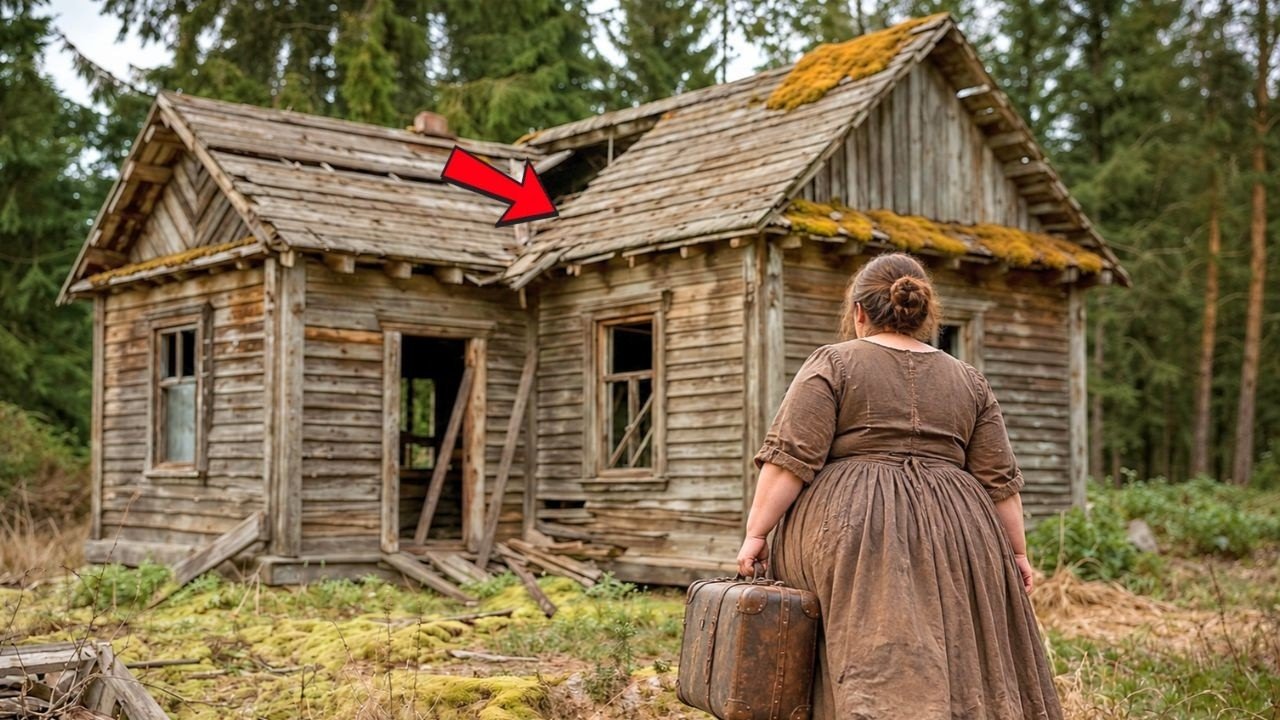
The roof didn’t leak anymore. The porch didn’t lean.
The spring sparkled across the valley. The survey stones stood right where her grandfather set them.
Tobias’s hammer rang steady from the barn.
They’d given her this house to make her disappear.
They laughed. Offered her twenty dollars. Sent riders in the dark. Told the whole town she was confused.
And she’d simply pulled up an iron ring.
And let the numbers tell the truth.
Not bad for a ruined house, Mabel thought.
Then she went back inside to her accounts.
For the first time in her life, every bit of it was hers. 🌄
✨ Never underestimate the quiet person who keeps the books. Patience, honesty and paying attention can beat money, power and a whole town’s laughter.
💬 Would you have taken Hollis Vane’s $2,000, or Sutton’s $12,000? Tell me honestly in the comments!